
I Failed the AWS DevOps Pro by 24 Points. Here's How I Passed on the Second Try.
I sat the online proctored exam at 8:00 AM, staring at my webcam for three gruelling hours. When I finally clicked "End Exam," the screen simply closed. No result. Just silence. The new AWS results system doesn't always give you instant gratification. For 13 hours, I waited. I replayed every question in my head, oscillating between confidence and dread.
Finally, at 9:00 PM, the notification pinged on my phone. I opened the email, expecting relief, but found a punch to the gut. Score: 726.
The passing score is 750. I missed this notoriously difficult certification by a mere 24 points. It was more than frustration; it was embarrassing. I worked at AWS, surrounded by these services every day. So why did I fail?
That failure made me realise what was truly required to succeed at this level.
It forced me to confront a harsh truth: Hands-on experience isn't enough.
The AWS Certified DevOps Engineer - Professional exam doesn't ask "What does CodeDeploy do?" It asks:
"You have a 3-tier application with a database that can't have downtime, a frontend that needs A/B testing capability, and a compliance requirement for audit trails. Traffic must shift gradually with automated rollback. Which deployment strategy optimally addresses ALL requirements?"
That's when I realized: this isn't a knowledge test—it's a decision-making simulation.
It cares whether you can choose the optimal pipeline architecture under extreme time pressure.
If you have failed this exam or feel paralysed by its reputation for difficulty, this is for you. Here is how I recovered, redefined my study habits, and built a successful strategy.
The Trap of "Good Enough" Knowledge
I failed my first attempt due to overconfidence. I thought using a service meant knowing when to apply it. The exam ruthlessly disproved that.
I faced complex scenario questions where all four options seemed technically correct. I wasted time rereading and doubted my choices. I wasn't problem-solving like an Architect, but reacting as a stressed sysadmin.
I realised success required focusing less on features and more on decisions that drive architectural choices.
The Pivot: A Strategy for Redemption
For my second attempt, I stopped blasting through practice questions. I needed a completely different approach.
1. Taming the Chaos with the SPIDER Method
The biggest enemy on exam day isn't the content; it is the clock. Complex, multi-service scenarios can induce panic. To combat this, I developed a mental framework I call SPIDER to dissect questions without getting overwhelmed:
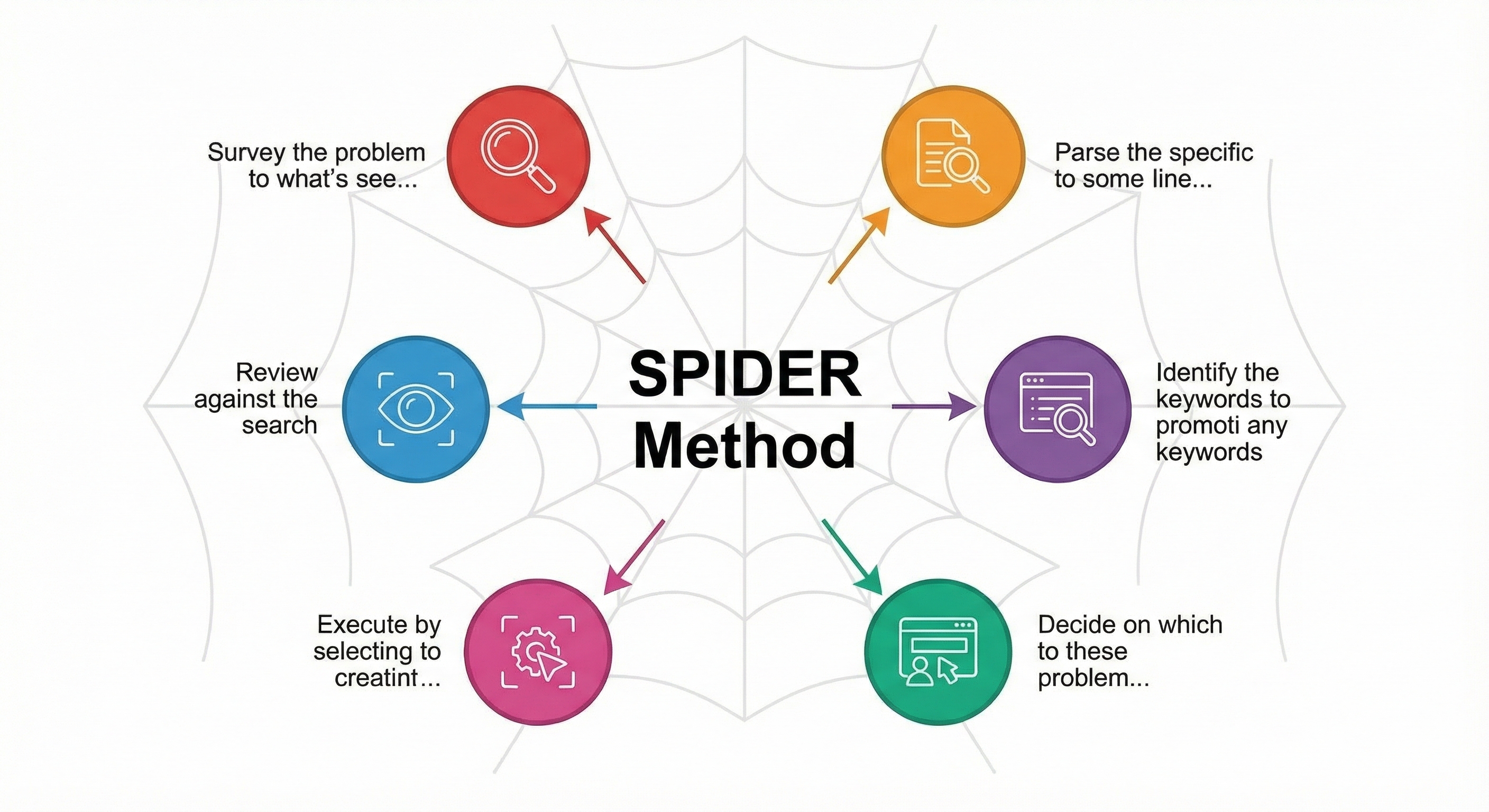
SPIDER in Action - Example:
Scenario Keywords:
Elimination Process:
Rolling updates
Can't guarantee zero downtime for DB
All-at-once
Violates gradual shift requirement
Blue/Green with CodeDeploy
Meets all constraints
This method helped me manage time effectively—I finished with 30 minutes to review on my second attempt.
This wasn't just a mnemonic; it was a survival mechanism. It stopped me from spiralling when I hit a wall of text.
2. Forensic Analysis of Failure
I stopped relying on third-party approximations and went straight to the source: AWS Skill Builder.
My mistake in the first attempt was using materials that didn't quite capture the specific "voice" or logic of the actual exam questions. For round two, I used the Official Practice Exams and Exam Prep courses on Skill Builder.
Calibrating to the "AWS Voice": The official practice questions are written by the same teams that write the real exam. They helped me understand exactly how AWS phrases subtle constraints.
The Audit Method: I treated every official practice question as a mini-audit. If I got it right, I verified that my reasoning matched the official explanation perfectly. If I got it wrong, I didn't just memorise the answer—I went to the linked whitepapers to understand the underlying principle I had missed.
Closing the Gaps: The Skill Builder "knowledge checks" were brutal but necessary. They told me exactly which domains (like SDLC Automation or Disaster Recovery) I was weakest in, so I could focus my time where it actually mattered.
In my first attempt, a correct answer meant I moved on. In my second, I treated every right answer as a possible guess, spending hours on explanations and learning why each option was wrong. Knowing why configurations fail is more valuable than knowing what works.
Hands-On Labs for Weak Areas
After identifying weak areas from practice exams, I built focused mini-projects:
- Complete CI/CD pipeline: CodePipeline → CodeBuild → CodeDeploy
- Blue/green deployments with ECS and Lambda
- Auto Scaling with target tracking, step scaling, and scheduled policies
- CloudFormation templates with custom resources and nested stacks
I built a "Failure Journal"—a collection of notes detailing exactly why my logic was flawed on specific questions. This turned my blind spots into my strongest assets.
3. Thinking the "AWS Way"
I realised that my real-world solutions were often "hacky" compared to the purist "AWS Way." The exam doesn't care about your clever workaround — it wants the textbook answer. To get there, I had to learn what the textbook answer actually looks like.
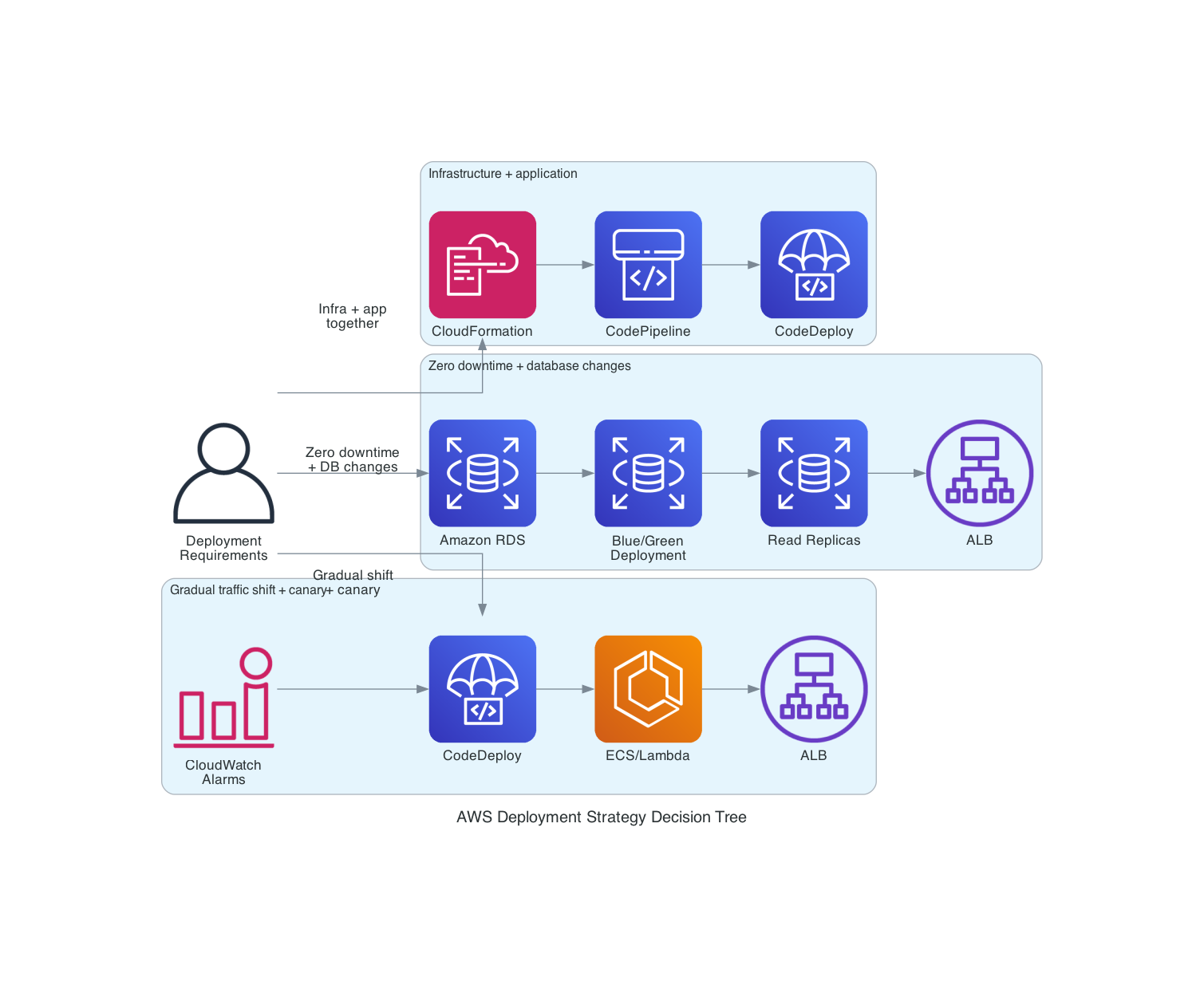
I went through the AWS Documentation and Whitepapers, looking for the "Why" behind architectures like the one above. I stopped memorising facts and started asking: given these constraints, which service is the right fit and why? I drew out decision trees and ran through scenarios until the reasoning clicked.
For example, distinguishing when Elastic Beanstalk is better than AWS CodeDeploy is crucial. Recognising these scenarios is often key to passing.
The Mindset Shift
The breakthrough came when I stopped trying to memorise service features and started asking a different question: given these three constraints, which option breaks the fewest rules?
The Critical Battlegrounds
To pass, you must master—not just know—these topics. The exam adds complexity to test your depth of understanding in each area.
CloudFormation is King
You need to know that Infrastructure as Code goes far beyond YML file structure. Expect to be tested on managing complex dependencies, cross-stack references, and nested stacks.
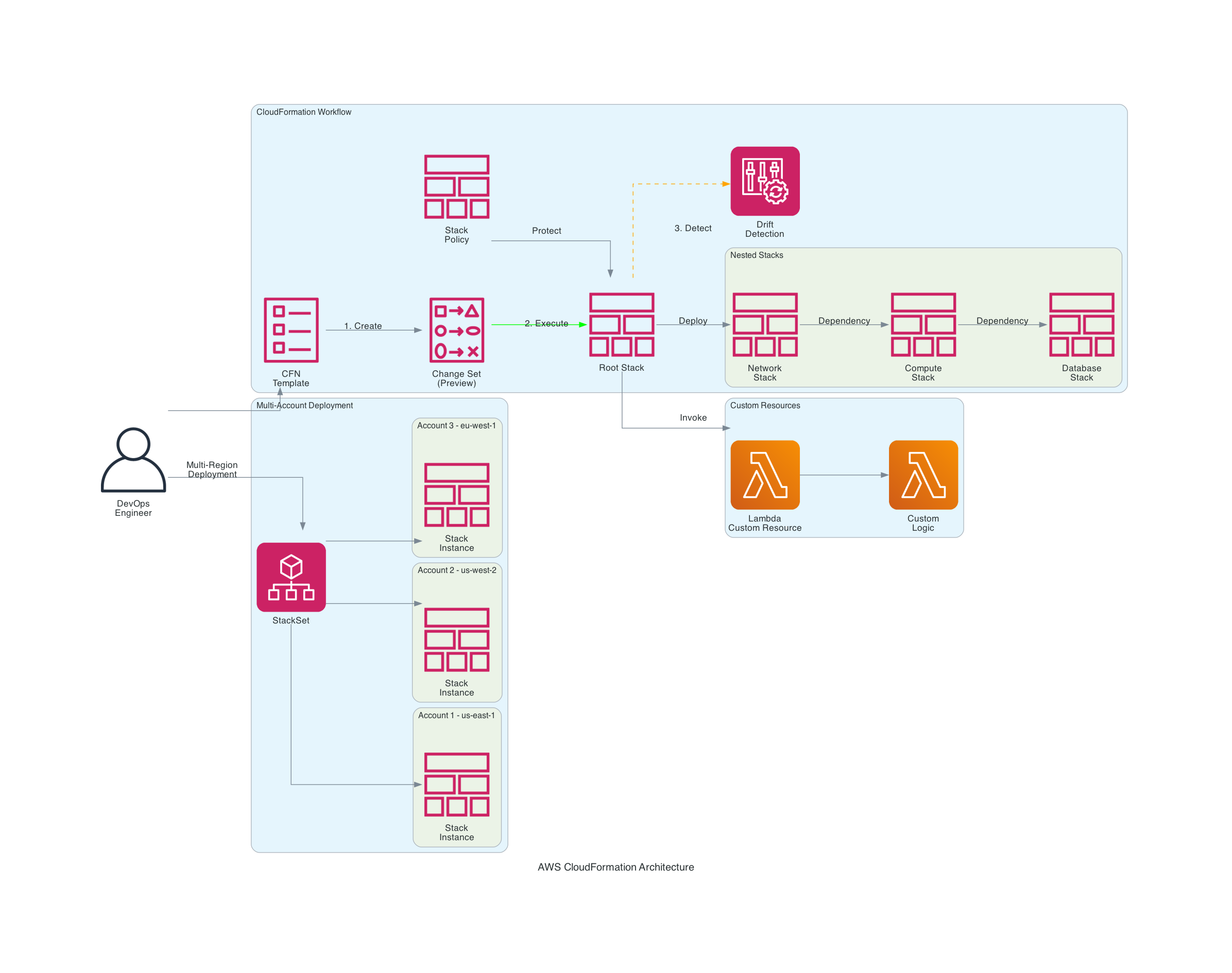
If you cannot look at a diagram like the one above and understand how StackSets might be used to deploy it across multiple accounts, or how drift detection would function here, you need to spend more time in the documentation.
The Deployment Dance
The differences between Canary, Linear, and All-at-once deployments trip up many candidates. Know how to achieve zero downtime with modern deployment strategies.
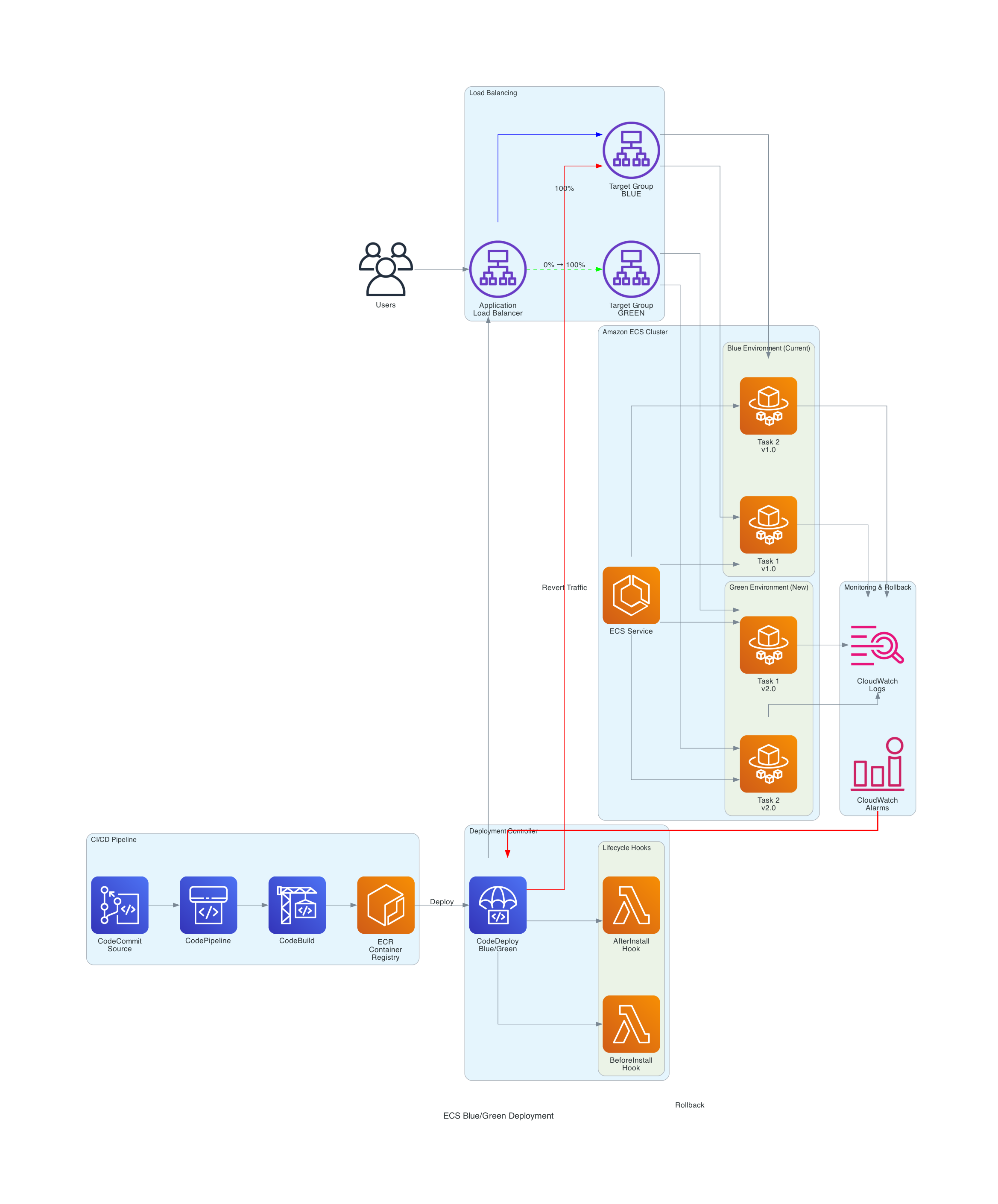
You need to know exactly which services handle traffic routing at each stage of a Blue/Green deployment. If you can't trace the flow from ALB to target groups to the new task set in the diagram above, go back to the docs.
Elasticity at Scale
Auto Scaling comes up a lot, and not just "enable Auto Scaling." You need to know lifecycle hooks, warm pools, and predictive scaling policies.

Multi-Region Resilience
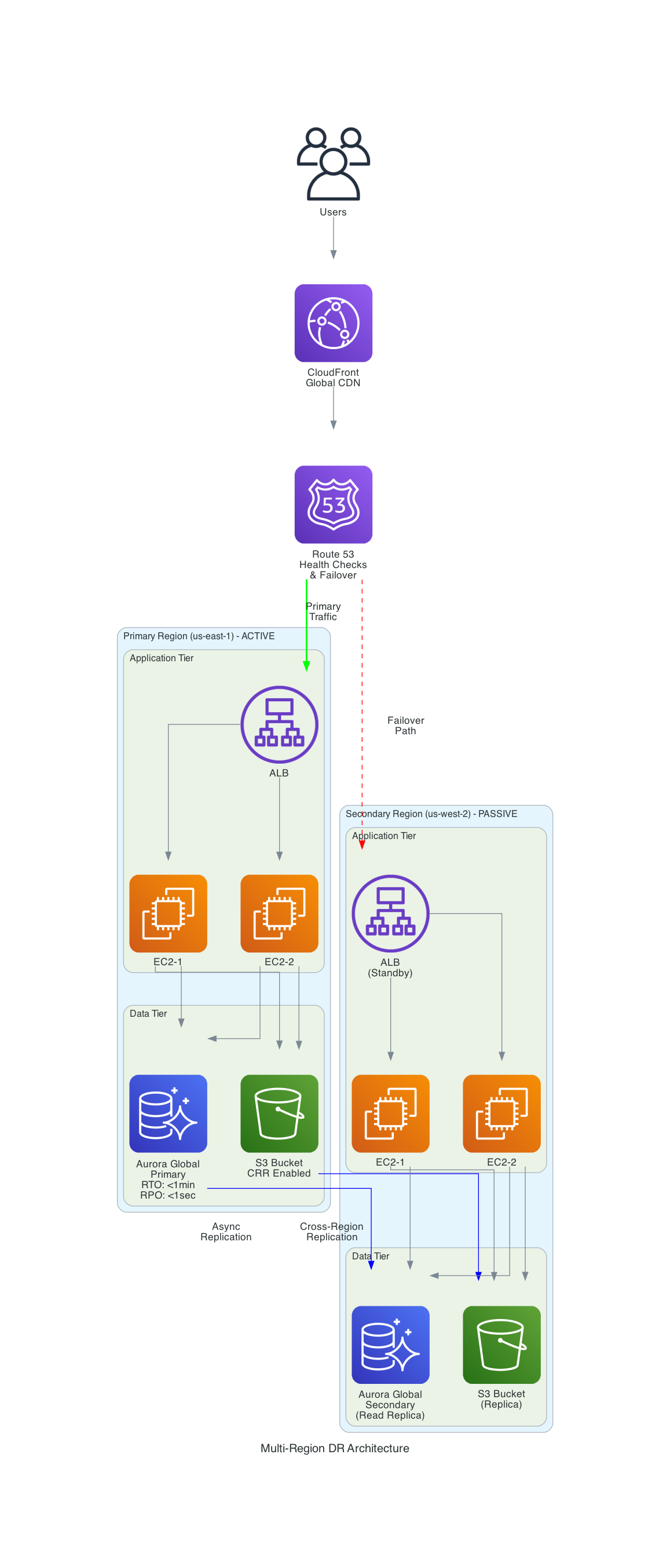
The exam will test whether you can design an architecture that survives losing an entire AWS region. This means knowing your RTO/RPO trade-offs, Route 53 failover configurations, and cross-region replication strategies cold.
The Rematch
Walking into the exam centre the second time felt different. I wasn't hoping to get lucky; I was ready to execute.
The questions hadn't changed, but I had. When a complex scenario appeared, I didn't panic. I used the SPIDER method. I visualised the architecture in my head—like the diagrams above—and saw the constraints clearly. The 726 that haunted me was replaced by a "PASS."
If You Just Failed This Exam
I know how it feels. You put in the hours, you walked in confident, and the result doesn't match the effort. It stings.
But here's what I can tell you from the other side: the gap between failing and passing this exam isn't knowledge. It's approach. I didn't learn a single new AWS service between my first and second attempt. I just changed how I read questions, how I eliminated answers, and how I practised.
Build a failure journal. Use the official practice exams. Stop memorising and start reasoning. You're closer than the score suggests.
I work at AWS in Dublin and build production infrastructure in my spare time. If you're prepping for this exam and want to compare notes, feel free to reach out.